Bird by Bird 2

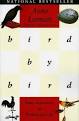
Image result for bird by bird book cover

Getting Started

Writing down all of your thoughts is key. It does not matter if it does not sound good right away. When starting to write, think of ideas to write about such as memories, interests, family, friends, or your childhood. Each of the senses should be added also. Writing is often painful at first, but you just have to get started.

Effect on my writing

When I dont have ideas to write about I should think about my past experiences.I need to know that even famous authors come to a point in their writing where they are stuck. We all need to just keep on writing and it will all get better.

Short Stories

Breathe slowly and let your mind just think when you are trying to write a short story. On short assignments is just one paragraph describing the main character. When her students are overwhelmed about writing she likes to tell them her bird by bird story. Writing all of your thoughts down helps a lot. Imagine that it is only you in the room. Imagine that everyone around you are just tiny little mice.

Effect on my writing

Trusting the process is very important. If you do not believe that your writing will turn out to be the best it can be, then it wont. The first draft should be very long, almost double the first copy. After the first draft, correct the errors and then write another draft. After that, correct it and that should be your final draft.


Bird by Bird 1

Introduction

Image result for bird clip art

The introduction of Bird by Bird gives many writing suggestions and tells a story of a women who many people can relate to her writing. She explains that writing makes you pay attention, writing gives you an excuse to do things, to go places, and explore. She started writing when she was 7, she found it hard and easy at times. High school is the time when she really started liking writing. At the age of 19 she dropped out of college and moved back to San Francisco. Her dad was unfortunately battling cancer. She decided to write a book about it.She had mostly good reviews, but some were bad. That will always happen in writing. She decided to start teaching a writers workshop class.

Finding Your Writing Voice

4 Examples of Writing Voice

Example 1 is Evernote. This is all about gathering everything that matters the most. Pictures,articles, letters, etc. is very helpful. It addresses a wide audience and is very concise, or short and sweet. Example 2 is Man Crates. This is usually towards a specific reader. It uses strong connotation and is for a specific reader. Example 3 is Nancy Duarte. Nancy communicates her ideas very well in her writing. She likes to use a lot of sensory words that create images in our heads. Example 3 is John Morrow. He likes to use a low of emotions in his writing to the point where it becomes too much. He speaks strongly to his audience.

Step 1 for Strengthening your Voice

Be concise. Having too much detail in the wrong situations is something no writer wants to do. The reader doesnt want to read it then either. Presenting thoughts clearly is essential. The writer needs to cut out all of the unnecessary details and really look at what matters.

Step 2 for Strengthening your Voice

Appeal to your reader. It is really good to act like you are having a conversation with your reader. You want to act like you are in the readers mind and answer every question that he/she might have. Writing is not a one way process, it is a two way process.

Step 3 for Strengthening your Voice

Paint clear pictures. Sometimes when we think of being concise, we think of using as many words as possible. This is wrong. Being concise is saying everything that is important and leaving the extra unnecessary details out. You want to paint a picture in the readers mind. Adding in words that are more emotional and sensory will help with that.

Step 4 for Strengthening your Voice

Add rhythm to your writing. You need to mix short and long sentences, this adds rhythm. Nobody likes a monotone, even in writing. Using one sentence paragraphs usually stress the point you are trying to make. The staccato of short sentences make your voice more dynamic and exciting.

The 5 Basic Brush Strokes for Painting

Painting and writing are a lot a like. Writing is made up of different sentence structures as to painting is made up of brush stroke techniques. There are five basic brush strokes: participle, absolute, appositive, adjectives shifted out of order, and action verbs.

Participle

In the article, Painting with Five Basic Brush Strokes, it states that a participle is ing verb tagged on the beginning or end of the sentence. Particples are what make the wrtiing more exciting, it evokes it. A participle can also end with the suffix -ed. Adding several participles can help paint more detailed pictures. Example- I like that shining star. Example with -ed – she has learned.

Absolute

Absolutes are sentence parts that describe the rest of the sentence in which they appear. They are almost complete sentences. To test them, you can make any absolute a sentence by adding was or were. Just like participles, absolutes also add detail to sentences. Absolutes are also usually attached to -ing. Example – His hands raw, he reached a flat place at the top. I used a sentence opener and we know that it is an absolute because you can fit “were” between hands and raw, “his hands were raw”.

Appositives

Appositives are noun phrases that identify adjacent nouns or pronouns. They can occur as sentence openers, subject-verb splits, or sentence closers. It can also be defined as a noun that adds a second image to a preceding noun. It expands the details in a readers imagination. It adds detail to a noun, and spices up the story. Example – One of four brothers, Craig was a moody, playful child. That was used as a sentence opener. I gave more detail on Craig.

Adjectives Shifted Out of Order

Adjectives shifted out of order amplify the details of an image. When authors want to stack an image with three adjectives, they avoid a three-in-a-row string by using a technique called adjectives shifted out of order. They leave on adjective in its original place and shift the two others after the noun.It creates a spotlight and intensifies the image. Example- The woman, old and wrinkled, smiled upon her newborn great grandson with pride.

Action Verbs

An action verb is like replacing still photos with motion pictures. Adding an action verb to a sentence can bring an inanimate object to life. There are being verbs and action verb. An action verb is like saying the gravel road curled around the left side of the barn. Curled is the action. A being verb in a sentence- the gravel road was on the left side of the barn. By replacing being verbs with action verbs, the writer is able to sharpen images.

Showing vs. Telling

In the article, Showing and Telling: the basics, it stresses the importance of showing and telling. These are the two things you need for a good story, although showing is better than telling. I will explain why showing is better.

SHOWING

Using the 5 senses while writing makes the reader feel like they are actually there. It is also way more interesting because there is a lot of more detail. We are told to create images in our minds while we read. The images we create in our heads help us understand what we are reading. Without showing, we are not able to do that. Some types of showing is evoking, presenting, channeling, and even using dialogue. Evoking is making the reader feel connected to the story by giving emotional experiences and physical descriptions. Presenting is using vivid details. Finally, channeling is using emotion so that the reader can feel your emotions as well.

TELLING

Telling is like being short and sweet. It is being concise, when necessary. Telling is sometimes better than showing, although showing is usually the better choice. The author says that telling is also like informing, explaining, and understanding. An example from the article for informing is, “The temperature has fallen overnight and the heavy frost reflected the sun’s rays brightly.” It is just a simple sentence with not much detail. Sometimes in a story it is best to tell when you want the reader to imagine on their own or when you want something to be open-ended.

MY EXAMPLE

Image result for winter morning picture

Showing: A cold shiver went down my spine as I looked out of my bed room window. My eyes filled with the sight of frosty trees and even my car. As I walked outside to heat my car up, the crisp, cold morning air filled my nostrils. I could see my breath, it looked like a pile of smoke.

Telling: It is cold outside today.

I showed that it was cold outside by using my five senses. From my showing example, you can see that it was cold outside because I used vivid details.

Passionate Blogging

Right now, writing a blog post seems pretty scary because I have never done it before. But through time and practice, it will get easier for all of us. In an article that I read, Five tips to write a blog post people will actually read, it gives 5 tips for a good blog. The 5 tips are as follows: know your audience, find your writing style, choose a topic that interests you, write a great intro, and pick a catchy title. I feel like choosing a topic that interests you and a catchy title are the most important thing. Writing about something you’re passionate about is very important. It really shows when the writer isn’t interested in the topic he/she is writing about. It is usually dry or not interesting. Showing passion when you are writing is important. The blog is much more interesting and can make the reader understand the writer even more. For an example, I would never write about basketball. I woudn’t do this because I am not passionate about basketball, I am passionate about soccer. If I wrote about basketball, there would be no real life examples or emphasism in my writing. Compared to soccer, I could write many real life experiences and there would be a lot of excitement going on in it. People would actually want to read it because I enjoy writing about the topic and it wouldn’t be dry. Next, choosing an important title is very important. It is the first thing that the readers see. If it is something boring, nobody is going to want to read it. It needs to be intriguing. My title isn’t just “My blog”, or “Blog Post”. “Passionate Blogging” is what mine is called and this is intriguing because the reader will know it wont be boring. I am writing about something that makes me happy. Everyone will get better with blogging by practicing.

Introduce Yourself (Example Post)

This is an example post, originally published as part of Blogging University. Enroll in one of our ten programs, and start your blog right.

You’re going to publish a post today. Don’t worry about how your blog looks. Don’t worry if you haven’t given it a name yet, or you’re feeling overwhelmed. Just click the “New Post” button, and tell us why you’re here.

Why do this?

  • Because it gives new readers context. What are you about? Why should they read your blog?
  • Because it will help you focus you own ideas about your blog and what you’d like to do with it.

The post can be short or long, a personal intro to your life or a bloggy mission statement, a manifesto for the future or a simple outline of your the types of things you hope to publish.

To help you get started, here are a few questions:

  • Why are you blogging publicly, rather than keeping a personal journal?
  • What topics do you think you’ll write about?
  • Who would you love to connect with via your blog?
  • If you blog successfully throughout the next year, what would you hope to have accomplished?

You’re not locked into any of this; one of the wonderful things about blogs is how they constantly evolve as we learn, grow, and interact with one another — but it’s good to know where and why you started, and articulating your goals may just give you a few other post ideas.

Can’t think how to get started? Just write the first thing that pops into your head. Anne Lamott, author of a book on writing we love, says that you need to give yourself permission to write a “crappy first draft”. Anne makes a great point — just start writing, and worry about editing it later.

When you’re ready to publish, give your post three to five tags that describe your blog’s focus — writing, photography, fiction, parenting, food, cars, movies, sports, whatever. These tags will help others who care about your topics find you in the Reader. Make sure one of the tags is “zerotohero,” so other new bloggers can find you, too.

Design a site like this with WordPress.com
Get started